
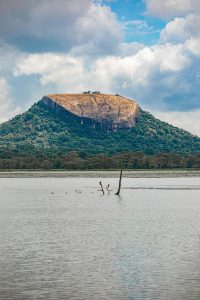
- 4:30 AM. The tuk tuk sputters to life in total darkness. You can barely see the road ahead. Somewhere beyond the treeline, a 200 meter volcanic hill rises out of the Sri Lankan jungle, and you are heading straight for it.
By the time you reach the summit of Pidurangala Rock, the sky is turning from black to deep violet. Then gold. Then suddenly, Sigiriya Lion Rock appears below you, glowing in the first rays of daylight, surrounded by mist and endless forest. No photograph captures it. You just have to be there.
This is why thousands of travellers skip the alarm, hire a tuk tuk before dawn, and make the climb. This complete guide tells you everything you need to know before you go.
Why Pidurangala Rock Beats Sigiriya for Views
Most people come to Sigiriya for the famous Lion Rock Fortress. That is entirely understandable. However, here is the thing most guidebooks don’t tell you upfront: the best view of Sigiriya is not from Sigiriya. It is from Pidurangala.
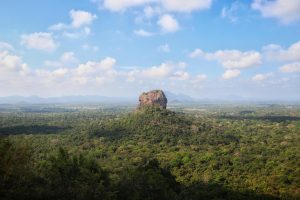
While Sigiriya’s Lion Rock is the most famous, Pidurangala might be even better. From the top, you get panoramic views across the valley and a unique perspective of Lion Rock itself, floating above the jungle canopy like something from a film.
The price difference makes the decision even easier. The entrance fee to Lion Rock is USD 36 per person. Pidurangala costs just USD 3.50. Better views, a fraction of the cost, and far fewer crowds. The choice starts to feel obvious.
A Quick History of Pidurangala Rock
The story behind this place adds a fascinating layer to the climb. When King Kashyapa arrived in Sigiriya in the 5th century, he discovered the site was already a working monastery complex. Wanting to build his fortress there, he offered the monks an alternative: a brand new monastery at the nearby rock. He reportedly promised them a “golden monastery,” which translates as “Aran gala.” That offer gave Pidurangala its name, meaning “offered piles of gold.”
Beyond being a tourist viewpoint, Pidurangala remains a living centre of religious significance. The Pidurangala Sigiri Rajamaha Viharaya temple sits at the base of the rock. A 12 metre reclining Buddha resides in a cave partway up. Monks still live and worship here today. This is not just a hike. It is a walk through living Sri Lankan history.
Pidurangala Rock: Essential Information
Before you set your alarm, here is everything you need to know:
Entrance fee: 1,000 LKR per adult and 500 LKR per child aged 6 to 12 for foreign visitors. The fee goes directly to the temple as a donation.
Opening hours: The ticket office opens at 5 AM and closes at 6 PM daily. The summit itself has no closing time.
Hike duration: 30 to 45 minutes going up and 15 to 30 minutes coming down, depending on fitness level.
Difficulty: Moderate. The first section is manageable for most people. The final boulder scramble requires using your hands and a reasonable level of fitness.
Height: 200 meters tall, rising 340 meters above sea level out of the jungle.
Facilities: No toilets on the trail. No shops or food vendors inside the park. Bring everything you need from your accommodation.
Parking: Free. Search for “Vehicle Park of Pidurangala Rock and Temple” on Google Maps.
What to Expect on the Pidurangala Rock Hike
The trail breaks into four distinct sections, each with its own character. Knowing what is coming makes the whole experience significantly more enjoyable.
The Temple Entrance
The trail begins at the Pidurangala Royal Cave Temple. You pay the entrance fee here before starting the ascent. Cover your shoulders when passing through the temple grounds as a sign of respect. A free sarong is available on site if you need one. Remove your shoes at the temple entrance and move quietly. This is an active place of worship, and the monks who live here deserve that respect.
The Forest Path
After the temple, the trail winds through shaded forest with uneven stone steps. It is not too steep, but watch your footing carefully, especially after rain. The forest section is genuinely beautiful. Birds call through the canopy overhead, the air is cool before the sun rises fully, and the sounds of the jungle surround you completely. Take your time here rather than rushing through to the top.
The Reclining Buddha
Midway through the hike, you reach a large reclining Buddha statue built into a rock shelter. The Buddha is 12 meters long and faces east, welcoming the sunrise each morning. Take a short break here before continuing upward. It is a peaceful and unexpected moment in the middle of a climb.
The Boulder Scramble
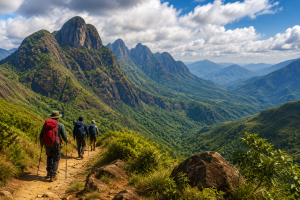
This is where Pidurangala earns its reputation. The last section requires scrambling over large boulders to reach the summit. There is no technical climbing involved, but you will need to use your hands and watch every step carefully. Some of the boulders have ropes to help you climb. Others do not. Take it steadily. Rushing the final section is the most common reason people struggle.
The View from the Summit
There is a moment, just as you pull yourself onto the flat summit rock, when everything opens up. The forest stretches to every horizon. Directly south, rising impossibly from the jungle canopy, Sigiriya Lion Rock stands in full view.
The large boulder at the highest point has plenty of space for visitors to walk around and take in the scenery. At sunrise, the light moves across the rock face in a way that changes every few minutes. Photographers who plan their trip around this moment tend to stay for the full show.
Budget at least one hour at the top. You will not regret it.
Sunrise vs Sunset at Pidurangala Rock
Both are spectacular. The choice depends on your priorities.
Sunrise is the most popular option and for good reason. Watching the first rays of light hit the surrounding landscape while morning mist clears from the jungle below is genuinely magical. The air is cooler. The crowds are smallest in the very first hour of the day. Sigiriya faces the morning light directly, which makes the view even more dramatic.
Sunset offers different rewards. The golden hour light on Sigiriya turns all shades of pink and orange as the sun dips behind the hills. The descent in fading light requires a torch, so plan accordingly.
The consensus among experienced visitors is consistent: sunrise wins. Get up early, take the tuk tuk in the dark, and watch the world come alive from the top of Pidurangala Rock.
Best Time to Visit Pidurangala Rock
December to April is the ideal window. The Sri Lankan dry season in the Cultural Triangle brings minimal rainfall and the clearest sunrise views. March specifically offers the best chance of cloud free mornings.
Avoid October to December. Heavy monsoon rains make the path extremely dangerous. Even if you manage to reach the top, clouds will very likely obscure the view entirely.
If you visit between May and September, an early morning start reduces heat and humidity significantly. August falls in the secondary dry season and is manageable with a pre dawn departure.
How to Get to Pidurangala Rock
- From Sigiriya town: The rock sits approximately 10 minutes by tuk tuk from the town centre. A local tuk tuk costs around 200 LKR each way. Pre arrange your driver for an early morning pickup, as finding transport in the dark before 5 AM without a booking is stressful.
- From Dambulla: You can reach Pidurangala by tuk tuk for around 1,000 LKR or by local bus to Sigiriya for just 50 LKR.
- From Kandy: Take the bus to Dambulla, then connect to Sigiriya by local bus or tuk tuk.
- From Colombo: The drive covers approximately 175 kilo meters via the A6 highway and takes around four hours.
No guide is required. The trail is well marked and visitors hike completely independently. Simply arrive, pay at the ticket office, and start climbing.
What to Pack for the Climb
Packing light is essential. Carrying too much makes the boulder scramble noticeably harder.
Footwear: Trainers or hiking shoes with grip work best. Sandals and flip flops are not suitable for the boulder section.
Clothing: Light, breathable layers for the climb. Bring a sarong or scarf for the temple section at the base. This applies to both men and women. The monks provide sarongs if you forget, but they can run out during busy periods.
Water: Bring at least one litre per person. There are no shops or refill points anywhere on the trail.
Headlamp: Essential for sunrise hikes. The path is completely dark before dawn.
Snacks: Something small to eat at the top adds to the experience significantly. Sitting on the summit rock with a snack as the sun rises is one of those travel moments you genuinely remember.
Pidurangala Rock vs Sigiriya: Which Should You Choose?
The honest answer is both, if your schedule allows.
The ideal approach is to visit Pidurangala at sunrise and Sigiriya Lion Rock in the afternoon or at sunset. Stay in Sigiriya village for at least two nights to make both worthwhile.
If you can only choose one, the decision comes down to your priorities:
Choose Pidurangala Rock if you want the best view of Sigiriya, a more adventurous and less crowded hike, and a budget friendly entrance fee.
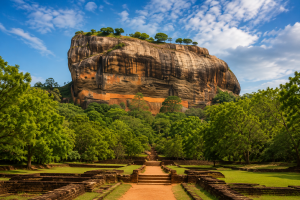
Choose Sigiriya Lion Rock if you want to explore the ancient palace ruins, frescoes, mirror wall, and gardens of a full UNESCO World Heritage Site.
Both are genuinely unmissable. Budget for both.
Nearby Attractions to Combine with Your Visit
Sigiriya Lion Rock sits just two kilo meters away. Entrance costs USD 36 for foreign visitors. Allow three to four hours for the full experience including the gardens at the base.
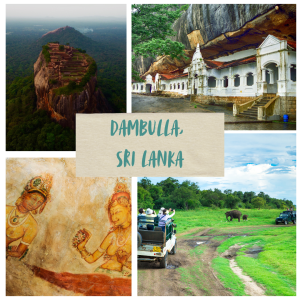
Dambulla Cave Temple is 17 kilo meters away. This UNESCO World Heritage Site houses some of Sri Lanka’s finest Buddhist cave murals and a remarkable collection of ancient statues across five interconnected cave chambers.
Minneriya National Park lies 30 kilo meters away. Between June and October, the famous Elephant Gathering takes place here, widely considered one of Asia’s most extraordinary wildlife spectacles.
Habarana Village is 25 kilo meters from Pidurangala. Traditional village tours, bullock cart rides, and genuine Sri Lankan home cooking make it a worthwhile half day stop.
Insider Tips Before You Go
Set your alarm earlier than feels reasonable. Arriving at the ticket office before 5 AM means you start the trail in the first group of the day. That matters significantly for sunrise timing.
Pre arrange your transport the night before. Ask your accommodation to organise a tuk tuk driver for you. Finding one spontaneously at 4:30 AM is possible but unnecessarily stressful.
Go slow on the boulder section. Rushing is where most people slip. There is plenty of space at the top and the sunrise will not disappear.
Carry your rubbish back down. There are no bins on the trail. The site and surrounding temple community depend on visitors treating the rock with genuine care.
FAQ: Pidurangala Rock
How much does Pidurangala Rock cost? The entrance fee is 1,000 LKR (approximately USD 3.50) for foreign adults and 500 LKR for children aged 6 to 12. The fee is a donation to the Pidurangala Rajamaha Viharaya temple at the base.
How long does the Pidurangala Rock hike take? The ascent takes 30 to 45 minutes. The descent takes 15 to 30 minutes. Allow at least one hour at the summit for sunrise viewing. Total time from base to base is typically two hours.
Is Pidurangala Rock difficult to climb? The difficulty is moderate. The forest steps section is straightforward. The final boulder scramble requires using your hands and involves real physical effort. People with limited mobility may find the upper section difficult.
What is the best time to hike Pidurangala Rock? Sunrise is the most rewarding time. December to April offers the clearest weather. March gives the best chance of cloud free mornings.
Do I need a guide for Pidurangala Rock? No guide is required. The trail is well marked and visitors hike independently. A local guide is optional but adds historical context if you want a richer experience.
Is Pidurangala Rock better than Sigiriya? For views, Pidurangala wins. For historical exploration and UNESCO heritage experience, Sigiriya wins. The ideal plan is to visit both.
Are there toilets at Pidurangala Rock? Basic facilities are available near the entrance only. There are no toilets on the trail itself.
Entrance fees, opening hours, and transport costs are subject to change. Always verify current details locally before visiting.



Leave a Reply