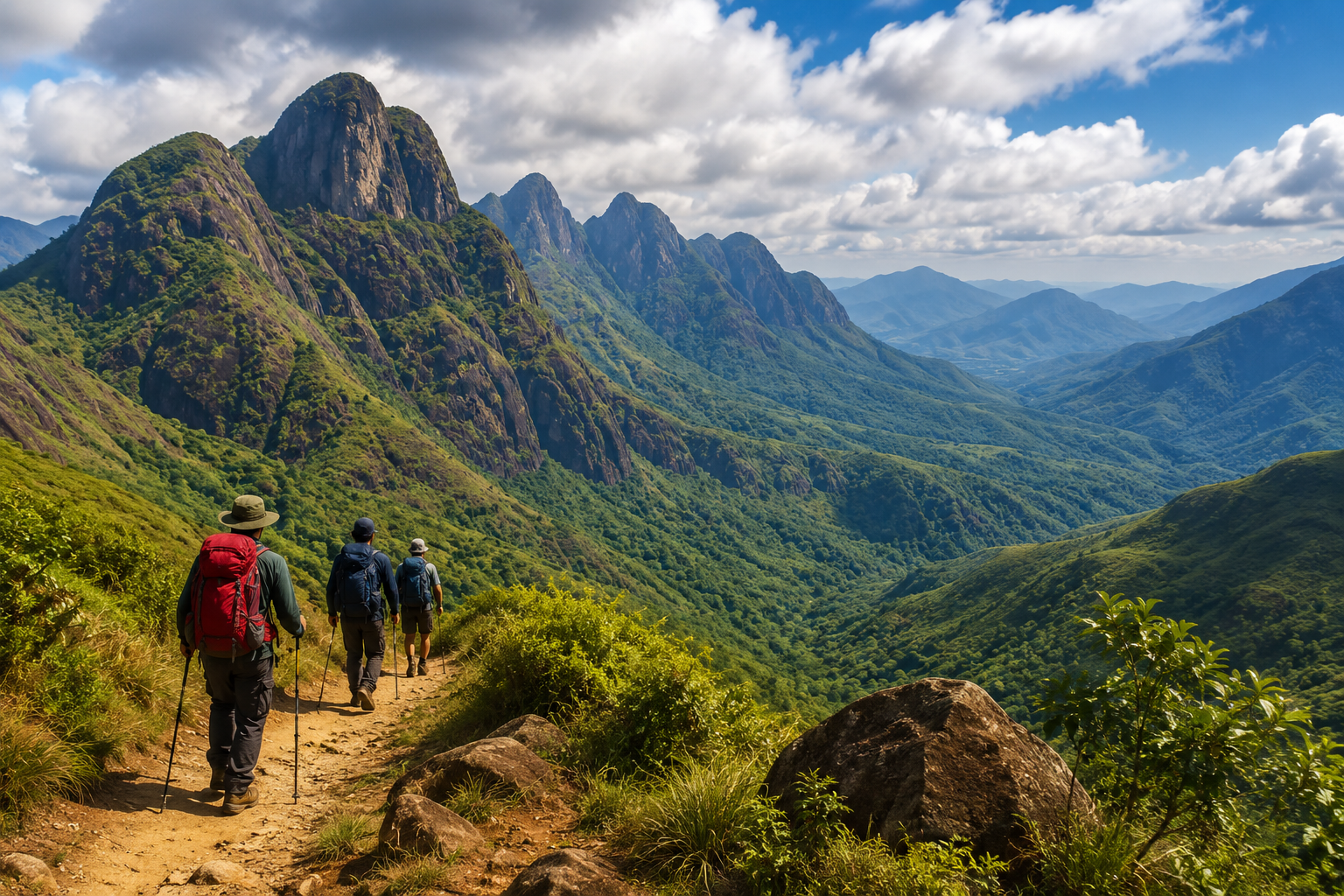
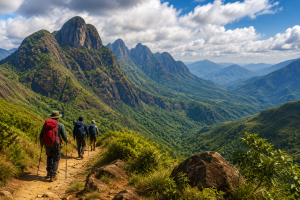
There’s a moment on the trail to Gombaniya Peak when the forest just opens up.
One second, you’re pushing through dripping, moss covered branches. Next, the entire hill country stretches out in front of you, layer after golden layer of mist wrapped peaks dissolving into the horizon. No crowds. No noise. Just wind, and the distant cry of a Sri Lankan junglefowl echoing somewhere far below.
That’s the Knuckles Mountain Range in a single breath. And if you haven’t been, you’re missing one of the most rewarding trekking experiences in all of Asia.
Whether you’re a seasoned hiker chasing your next summit or a curious traveller who simply wants to walk through a real cloud forest, this guide covers everything you need for a brilliant Knuckles Mountain Range trekking trip.
Why This Place Is Unlike Anywhere Else in Sri Lanka
The range gets its name from how it looks from a distance, five rugged peaks lined up like the knuckles of a clenched fist. Locals call it Dumbara Kanduvetiya, which translates loosely to “misty mountain range.” Both names nail it.
Spanning the Central Province, the Knuckles is a UNESCO World Heritage Site and one of Sri Lanka’s most important biodiversity corridors. It shelters over 34 endemic plant species, rare mammals, and birds that exist nowhere else on the planet.
But what really sets it apart is the rawness. This isn’t a manicured national park with paved paths and signboards every 50 meters. It’s genuine wilderness, muddy trails, river crossings, dense jungle, and ridgelines that make every aching step feel completely worth it.
How to Get There: The Journey Starts in Kandy
Most trekkers base themselves in Kandy, about 25 kilometers from the main entry points into the range.
Your two key gateway towns are:
- Hunnasgiriya, the most accessible starting point, reachable by public bus from Kandy in around 1.5 hours
- Meemure, a deeply remote village further into the range, best reached by 4WD along a track that’s an adventure in itself
From Kandy, you can take a local bus, hire a tuktuk, or arrange a private taxi if you’re carrying gear. If Meemure is your goal, don’t attempt the road in a regular car, it will humble you.
The drive through rubber plantations, paddy fields, and tiny hillside villages is genuinely beautiful. It sets the mood long before you reach the trailhead.
Best time for Knuckles Mountain Range trekking
January to April offers the driest, most reliable conditions. October and November bring heavy rains, trails get slippery, rivers rise fast, and the mist never fully lifts. That said, some trekkers love the moody, atmospheric quality of the wet season. Know what you’re signing up for.
The Best Trails: From Easy Walks to Serious Challenges
The Knuckles has options for every level. Here’s how to pick the right one.
Mini World’s End Trail, Perfect for First Timers
One day, moderate fitness, maximum payoff. This trail crosses Pitawala Pathana, a high altitude grassland plateau and ends at a dramatic cliff edge locals call “Mini World’s End.” The drop off view across the valleys below is genuinely jaw dropping.
Allow 3-4 hours return. Go early. The light and the views are best before the midday haze rolls in.
Gombaniya Peak Trail, For Those Who Want to Earn It
At 1,906 meters, Gombaniya is the highest point in the range. The trail is steep, often muddy, and long enough that you’ll feel it in your legs the next morning. Worth every bit of it.
At the summit, on a clear day, you get a full 360degree panorama, cloud forest in every direction, and on exceptional days, the distant outline of Horton Plains. Hire a local guide for this one. The route through the cloud forest sections isn’t always obvious.
Five Peaks Trek, The Big Multi Day Adventure
This is Knuckles Mountain Range trekking at its most ambitious. Covering 20-25 kilometers across multiple peaks over 2-3 days, the Five Peaks Trek moves through rocky ridges, ancient forests, paddy valleys, and remote communities where overnight stays need arranging in advance.
It demands proper preparation and solid fitness. But if you want a real wilderness experience, the kind you’ll still be talking about five years later, this is it.
Don’t Just Walk Past These Places
The trails connect you to far more than peaks and viewpoints.
Ash Cave Falls & Dothalugala Falls hide deep in the forest and make for perfect mid trek stops. Sitting beside them in the green half light of the jungle, with the sound of water bouncing off the rocks, it’s one of those simple moments that sticks.
Dothalugala Nature Trail is a dedicated path through thick endemic forest that ends at a sweeping viewpoint. Birders and plant lovers will want to slow right down here, rare orchids, tree ferns, and a serious variety of forest birds line the route.
Alugal Lena is a prehistoric cave with ancient rock drawings still visible on the walls. The trek to reach it layers cultural discovery on top of natural exploration, two very different kinds of awe in one outing.
Thangappuwa Village sits deep inside the range and is home to a community that still farms using traditional methods passed down for generations. Visiting here puts the whole landscape in human context in a way that no viewpoint can.
Wildlife: What You’re Actually Likely to See
The Knuckles is outstanding for birdwatching. The Sri Lanka junglefowl, the national bird, is regularly spotted along the trails. Ceylon spurfowl, endemic kingfishers, and several species of flycatcher all live here. Early mornings are extraordinary. The forest wakes up in layers of overlapping calls, and if you stop walking and just listen, it’s one of the best sounds in nature.
For mammals, purple faced langurs are the most commonly seen, often crashing through the canopy overhead with zero subtlety. Sambar deer graze in the grassland sections at dusk. The fishing cat and porcupine are present but require patience and quiet movement to encounter.
Butterfly diversity is genuinely impressive, over 80 species have been recorded in the range. If you’re a macro photographer, bring your gear.
Where to Stay: Honest Options for Every Budget
You won’t find international hotel chains up here. That’s part of the appeal.
Village homestays in Hunnasgiriya and nearby settlements offer some of the most memorable nights you’ll have in Sri Lanka. Homecooked meals, open fires, conversations with families who know every trail by heart, it’s the kind of accommodation that feels like a real experience rather than a transaction.
Ecolodges and glamping sites have grown in number around the buffer zones of the reserve. These give you more comfort, proper beds, private bathrooms, farm totable meals, without disconnecting you from the forest atmosphere.
One firm tip: book early if you’re visiting January to April. Accommodation in the range is limited and fills up weeks in advance during peak trekking season.
Conservation: Why It Matters and What You Can Do
The Knuckles faces genuine pressure, deforestation, invasive plant species, and the slow creep of unsustainable farming practices. These aren’t abstract threats. You’ll see the scars on the forest edges if you look closely.
The Knuckles Conservation Project is one active response, directly involving local communities in reforestation work and tying livelihoods to the health of the ecosystem rather than against it. Ecotourism, done thoughtfully, is a real part of the solution here.
Your choices as a visitor make a difference. Stick to marked trails. Don’t litter and if you find litter, carry it out. Choose local guides over package operators who don’t reinvest in the area. Choose accommodation that sources local and operates sustainably. None of this is complicated. It just requires paying attention.
Quick Practical Tips Before You Head Out
- Always hire a local guide, trails aren’t consistently marked, guides know the terrain intimately, and the fee goes directly into the local economy
- Carry at least 2 liters of water per person, don’t rely on finding clean water sources along the trail
- Pack a rain jacket no matter the season, altitude weather changes fast
- Register at the forest department checkpoint, it’s required and helps coordinate search and rescue if needed
- Start early, best wildlife, best light, clearest summit views all happen before 10am
FAQ: Knuckles Mountain Range Trekking
Do I need a permit? Yes. Entry fees and registration at the Department of Wildlife Conservation checkpoint are required. A local guide will typically sort this for you.
Is it safe to trek solo? On well marked shorter trails, yes. On remote or unmarked routes, hire a guide, it’s genuinely safer, far more informative, and the cost is minimal.
How fit do I need to be? Mini World’s End is manageable with average fitness. Gombaniya Peak and the Five Peaks Trek require solid aerobic fitness and comfort with sustained uphill walking.
What should I pack? Sturdy waterproof hiking boots, rain jacket, sun protection, insect repellent, snacks, water, and a basic first aid kit. Proper footwear is nonnegotiable.
Can I do a day trip from Kandy? Technically yes, for the shorter trails. But you’ll miss the atmosphere entirely. Stay at least one night, two or three is better.
The Knuckles Will Stay with You
Long after the mud is washed off your boots and the muscle soreness fades, something about the Knuckles sticks.
Maybe it’s the silence of the cloud forest at dawn or eating rice and curry with a family in Meemure whose grandparents were born and died in that valley. Maybe it’s that moment on the ridge when the mist clears and you realize, properly realize, that places like this still exist.
Knuckles Mountain Range trekking isn’t just a hike. It’s a reminder of what real wilderness feels like.
Go soon. Go carefully. Leave it better than you found it.



Leave a Reply