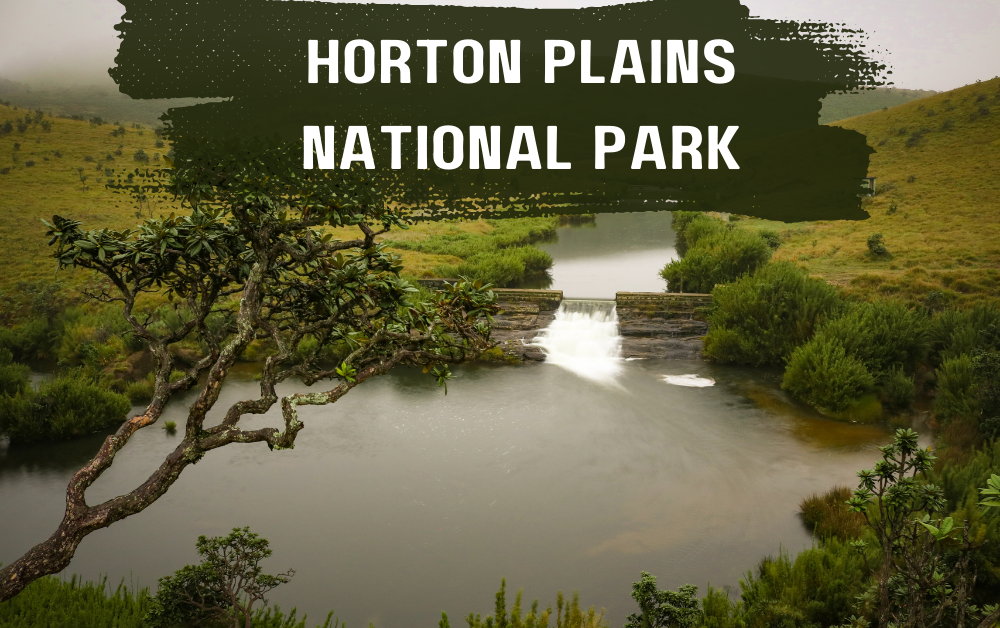
Picture this. You step out of the vehicle at 6 AM. The air bites at your cheeks. Mist drifts across the grasslands like slow breath, and somewhere ahead, the earth simply drops away into a valley painted gold by the rising sun. Nothing prepares you for that moment.
Horton Plains National Park does not reveal itself gradually. It hits you all at once. Perched over 2,100 metres above sea level in Sri Lanka’s central highlands, this UNESCO World Heritage Site offers one of the island’s most extraordinary natural experiences. Moreover, it is the only national park in Sri Lanka where visitors explore trails entirely on foot, without a compulsory guide.
Whether you are a hiker, a wildlife enthusiast, a photographer, or simply someone who needs to stand somewhere breathtaking, this guide covers everything you need to know before you go.
What Makes Horton Plains National Park So Special
Most of Sri Lanka is tropical and warm. Horton Plains is neither. The park sits between the island’s second and third highest mountains, Kirigalpotta at 2,395 metres and Totapola at 2,357 metres. Consequently, the climate feels closer to the Scottish Highlands than to a tropical island.
The landscape is genuinely unusual. Open wet grasslands give way to stunted cloud forests. Rocky outcrops rise beside crystalline streams. Filigree waterfalls appear around corners without warning. Furthermore, the park serves as the source of three of Sri Lanka’s most important rivers: the Mahaweli, the Kelani, and the Walawe. This makes it one of the most ecologically critical landscapes on the island.
Additionally, the park covers 31.6 square kilometres and sits within the Peak Wilderness Protected Area, which also includes the Knuckles Conservation Forest and Adam’s Peak.
Wildlife at Horton Plains National Park
The wildlife here is not always easy to spot. However, the rewards for patient observers are genuinely memorable.
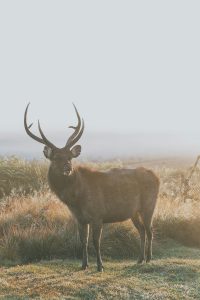
The Sri Lankan sambar deer is the most commonly sighted animal. Large herds graze freely across the open plains, particularly in the early morning. Wild boar move through the grassland edges, and the purple-faced langur swings through the ancient cloud forest trees. Leopards also inhabit the park. Notably, the Horton Plains leopard is larger and heavier than its lowland relatives, thanks to the cool climate and abundant prey. Early morning visits give you the best chance of a sighting.
Birdwatchers find Horton Plains particularly rewarding. Over 90 bird species have been recorded here. Key sightings include the Sri Lanka white-eye, the dull-blue flycatcher, the Sri Lanka bush warbler, the yellow-eared bulbul, and the Sri Lanka whistling thrush. All are endemic species found nowhere else on earth.
The Nelu Flower Bloom: A Once in a Decade Phenomenon
One of the most extraordinary natural events in Sri Lanka happens right here in Horton Plains National Park. The Nelu flower, a species of Strobilanthes, blooms only once every 12 years. When it does, it carpets the plains in a sweeping violet haze that travellers describe as genuinely otherworldly.
The last full bloom occurred in 2025. The next expected bloom is between 2036 and 2037. If you visit in the coming years, you will still see the Nelu plants covering the hillsides. However, the violet flowering carpet will not return for over a decade.
Hiking Trails in Horton Plains National Park
The park has four main trails, ranging from easy walks to serious highland treks. All trails are open from 6 AM to 6 PM. Arriving at or before 6 AM is strongly advised, because mist typically rolls in between 9 AM and 10 AM and obscures the views.
The World’s End Trail: The Signature Experience
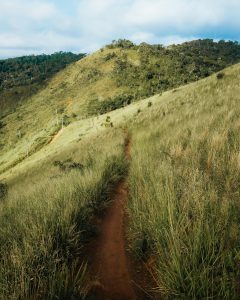
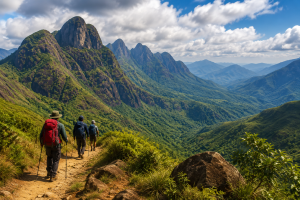
This is the trail that most visitors come for, and it earns its reputation entirely. The circular route covers approximately 9.5 kilometres and takes three to four hours at a comfortable pace.
The trail passes through both open grassland and cloud forest sections before reaching two dramatic viewpoints. Little World’s End comes first, offering a smaller but equally striking cliff edge view. The main World’s End follows shortly after. Here, the plateau drops sharply in an escarpment that plunges 880 metres into the valley below. On a clear day, the views stretch across tea estates, forested mountains, and distant coastlines.
According to AllTrails, the World’s End Trail holds a 4.7-star rating from over 326 community reviews, making it one of the highest-rated hikes in all of Sri Lanka.
After World’s End, the trail loops to Baker’s Falls before returning to the entrance.
Baker’s Falls: The Waterfall Worth Chasing
Baker’s Falls sits approximately three kilometres from the park entrance and forms part of the circular World’s End loop. The waterfall cascades approximately 20 metres through dense cloud forest, and the surrounding mist, rainbows, and icy spray create a genuinely fairy-tale atmosphere.
Named after the explorer Sir Samuel Baker, it is particularly beautiful in the early morning when light filters through the forest canopy. Furthermore, the Chimney Pool nearby offers a serene spot to pause beside clear, cool water surrounded by lush greenery.
Kirigalpotta Trail: For Serious Hikers
Kirigalpotta is Sri Lanka’s second highest peak at 2,395 metres. The trail to the summit is considerably more challenging than the World’s End loop. It involves steeper climbs, rougher terrain, and longer total distance. Nevertheless, the summit views reward the effort substantially.
This trail is recommended for experienced hikers with appropriate footwear, fitness, and an early start. Allow a full day if you plan to combine it with the World’s End loop.
Thotupola Kanda Trail: The Accessible Peak
Thotupola Kanda is Sri Lanka’s third highest peak at 2,357 metres. The trail covers just two kilometres and takes approximately one to two hours. Consequently, it suits families and travellers with limited time. The route passes through open grassland and offers pleasant views across the park. However, the summit itself is partially obstructed by vegetation, so it is better suited as an add-on to the main circular trail than as a standalone destination.
Horton Plains National Park Entrance Fee and Practical Information
Opening hours: 6 AM to 6 PM daily
Entrance fee for foreign visitors: USD 25 per adult, USD 12 per child
Vehicle fees: USD 10 for cars, USD 20 for vans, USD 40 for buses
No guide is mandatory. Horton Plains is the only national park in Sri Lanka where visitors can hike independently on marked trails. However, a local guide adds genuine value for wildlife spotting and ecology context if you want a richer experience.
Plastic bottles and polythene are prohibited beyond the park gate. Carry a reusable water bottle. There are no shops inside the park, so bring sufficient water and snacks for the duration of your hike.
Accommodation inside the park is limited to two lodges and three designated camping sites. All must be reserved in advance through the Department of Wildlife Conservation.
Best Time to Visit Horton Plains National Park
January to March is the optimal window. During these months, the weather is dry, the skies are clearest, and the views from World’s End are at their most expansive. Additionally, wildlife activity is highest in the dry season, making morning sightings more likely.
April to June and October to November bring the monsoon seasons. Heavy rain makes trails slippery and frequently obscures the views entirely. Furthermore, sudden weather changes are common year-round at this altitude, even outside monsoon season.
Regardless of when you visit, temperatures can drop to 5°C in the early morning. Always bring warm layers, a waterproof jacket, and sturdy hiking shoes.
How to Get to Horton Plains National Park
The park has two entrance points: Pattipola, which is the approach from Nuwara Eliya, and Ohiya, which is the approach from Haputale and Ella. Both entrances lead to the same visitor centre after a three-kilometre drive.
From Nuwara Eliya: The drive covers approximately 32 kilometres and takes around 1.5 hours via Ambewela. A private taxi or hired car is the most convenient option and gives you full control over your start time.
From Haputale or Ella: Take the train to Ohiya station, then hire a tuk-tuk or taxi to the park entrance. The scenic train journey through the hill country is outstanding in its own right and adds real value to the experience.
By public bus: Buses run to Pattipola and Ohiya from surrounding towns. However, you will need private transport for the final stretch to the park entrance.
Important: There is no public transport directly to the park. Pre-arranging your vehicle the evening before your visit is strongly recommended, particularly if you want to arrive by 6 AM.
Where to Stay Near Horton Plains National Park
Several excellent accommodation options sit within easy reach of the park.
Luxury options include Heritance Tea Factory, a unique property set inside a converted colonial tea factory with spectacular highland views, and The Grand Hotel in Nuwara Eliya, which has served guests since 1828.
Boutique and mid-range options include Jetwing St Andrew’s and Little England Bungalows, both of which offer comfortable stays with genuine character in the Nuwara Eliya area.
Eco and nature retreats nearest to the park entrance include Ohiya Eco Lodge and Nature’s Bliss Bungalow, both of which suit travellers who want to be closest to the park for an early morning start.
Conservation at Horton Plains National Park
The park is carefully managed to protect one of the most ecologically sensitive landscapes in South Asia. Current conservation efforts include active biodiversity monitoring, eco-guided tourism promotion, reforestation of native flora, strict zero-litter enforcement, and community-based conservation projects.
Visitors are expected to stay on marked trails at all times, carry all waste out of the park, and never feed or approach wildlife. These rules are enforced. Following them protects both the ecosystem and your experience.
Insider Tips Before You Go
Start at 6 AM without exception. The views at World’s End are entirely dependent on clear weather, and mist typically closes in within two to three hours of sunrise. Arriving late almost guarantees a wall of white instead of the views that make this park famous.
Dress in layers. The temperature at the park entrance in early morning can feel genuinely cold, particularly between December and March. A thin fleece and a waterproof outer layer take up minimal space and make a significant difference to your comfort.
Wear proper hiking shoes. The trails are well-maintained but can be slippery and uneven in sections, particularly after rain.
Bring more water than you think you need. There are no refill points or shops inside the park, and the circular trail is longer than it looks on a map.
Finally, move quietly. The wildlife in Horton Plains responds to noise. Sambar deer, langurs, and potentially leopards are far more likely to appear to patient, quiet visitors than to large, loud groups.
Final Thoughts on Horton Plains National Park
Very few places in Sri Lanka genuinely stop you in your tracks. Horton Plains National Park is one of them. The combination of dramatic highland scenery, rare endemic wildlife, ancient cloud forests, and the sheer spectacle of World’s End creates an experience that sits apart from anything else on the island.
Plan your visit carefully, arrive early, and move slowly through the trails. The park rewards those who pay attention.
It will stay with you long after you leave.
Entry fees, opening hours, and accommodation availability are subject to change. Always verify current details with the Department of Wildlife Conservation or your accommodation before visiting.







Leave a Reply