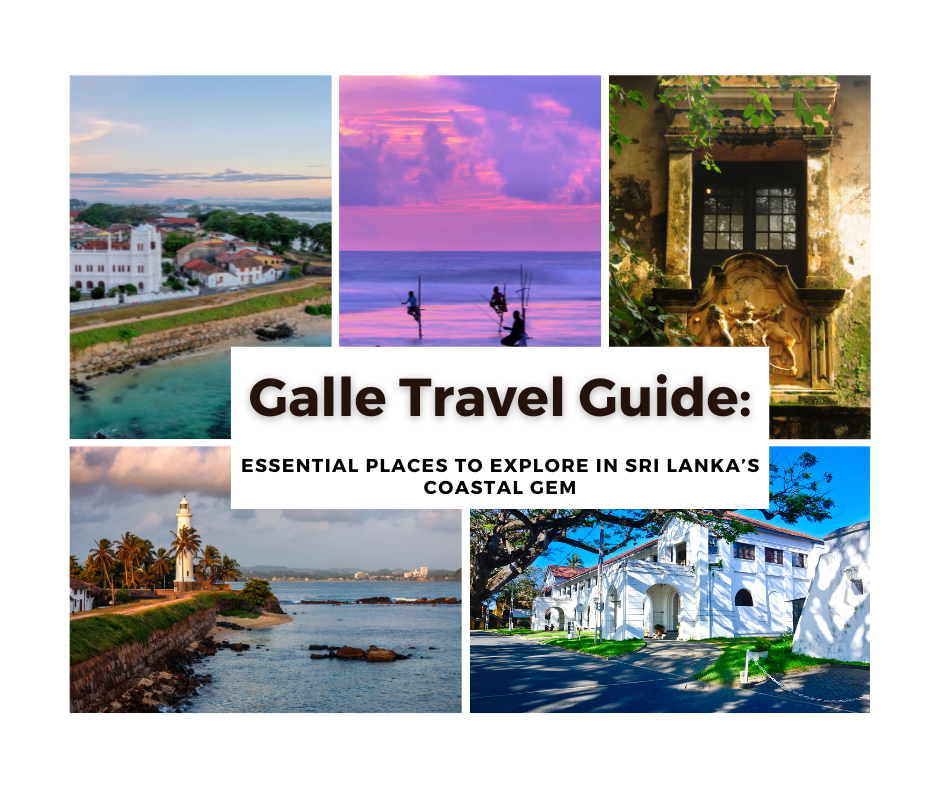
There’s a moment that happens to almost every first-time visitor in Galle.
You walk through the arch of the old fort gate, and suddenly the noise of modern Sri Lanka drops away. Narrow colonial streets stretch out ahead. Bougainvillea spills over stone walls. A lighthouse stands white against a blue Indian Ocean sky. And somewhere nearby, someone is brewing tea.
It hits you all at once: this place is genuinely unlike anywhere else.
Galle sits on Sri Lanka’s southern tip, about two hours from Colombo by train. It’s one of the best-preserved colonial port towns in Asia, a UNESCO World Heritage Site, and one of those rare destinations that rewards slow exploration far more than a rushed day trip.
Whether you have one day or one week, this guide covers every place to visit in Galle worth your time, plus the practical details that make the difference between a good trip and a great one.
Why Galle Belongs on Your Sri Lanka Itinerary
Most travellers put Galle on the list for the fort. They stay for everything else.
The town layers history, culture, food, beaches, and wildlife into a surprisingly compact area. You can spend a morning walking 17th-century ramparts, an afternoon snorkeling a coral reef, and an evening eating the best seafood curry of your life, all without leaving the southern coast.
The places to visit in Galle span centuries and moods. That’s what makes it so compelling.
Galle Fort: The Heart of Everything
No list of places to visit in Galle starts anywhere other than the fort.
Built originally by the Portuguese in 1588, then massively expanded by the Dutch throughout the 17th century, Galle Fort is one of the best-preserved colonial fortifications in Asia. The British arrived later and left their own architectural fingerprints. The result is a walled town where Dutch, Portuguese, and British influences layer on top of each other in genuinely fascinating ways.
The fort isn’t a museum piece. People live and work inside it. Boutique hotels, independent cafes, art galleries, and family homes all share the same centuries-old streets. That lived-in quality is exactly what makes walking through it feel so different from a typical heritage site visit.
The Fort Ramparts
Start here, especially in the late afternoon.
The ramparts run along the entire ocean-facing edge of the fort. Walking them gives you unobstructed views across the Indian Ocean on one side and terracotta rooftops on the other. As the sun drops, locals and visitors alike gather along the walls. It’s one of those collective sunset experiences that happens organically every evening and never gets old.
Galle Lighthouse
Originally built in 1848, the Galle Lighthouse is one of the most photographed landmarks in Sri Lanka. It stands at the southwestern tip of the fort where the ramparts meet the sea. The views from the surrounding area are excellent for photography, best in the early morning before the crowds arrive.
Dutch Reformed Church
Dating to the early 18th century, this church is one of the oldest Protestant churches in Sri Lanka. The interior is simple and quiet, with original tombstones embedded in the floor dating back to Dutch colonial officials and merchants. It’s a genuinely moving place to spend fifteen minutes away from the midday heat.
Old Dutch Hospital
Originally a colonial medical facility, the Old Dutch Hospital now operates as a shopping and dining complex. The restored open courtyards and original Dutch pillars create a beautiful setting for an afternoon coffee or a browse through independent boutiques. It’s one of the more successful heritage repurposing projects in the country.
Art, Culture, and Local Life Inside the Fort
Galle has a quietly thriving arts scene, most of it concentrated within the fort walls.
Several small galleries showcase work by local and regional artists, traditional Sri Lankan themes alongside contemporary pieces. The standard is genuinely high. If you’re looking for something meaningful to bring home rather than a factory-made souvenir, spending an hour exploring the fort’s galleries is worthwhile.
Street life inside the fort moves at its own pace. Local families, schoolchildren, and shopkeepers share the narrow lanes with travellers. Slow down enough and you’ll catch moments that no guidebook captures, a grandmother drying fish on a doorstep, children playing cricket in a courtyard, a tailor working by an open window.
Best Food and Cafes Near the Places to Visit in Galle
Food in Galle ranges from brilliant to outstanding. Here’s what to prioritize.
Sri Lankan Rice and Curry
The local rice and curry lunch, multiple curries, sambals, and papadum served on a single plate, is one of the best-value meals in the country. Small local eateries around the fort and in the surrounding town serve it fresh daily for a few hundred rupees.
Seafood
Galle’s coastal position means the seafood is exceptional. Fish, prawns, crab, and squid all feature heavily on menus along the fort’s main streets. Grilled fish with coconut rice is a staple worth ordering at least once.
Kottu Roti
This is Sri Lankan Street food at its most satisfying. Chopped flatbread stir-fried with vegetables, egg, and your choice of meat or seafood, cooked loudly on a hot griddle. You’ll hear it being made before you see it. Follow the sound.
Cafes Inside the Fort
The fort’s cafe scene has developed significantly in recent years. Good coffee, fresh juices, and light meals are available at several well-run spots along the main lanes. Many are set in restored colonial buildings with courtyard seating, some of the most pleasant lunch spots in southern Sri Lanka.
Beaches Near Galle: Day Trips Worth Taking
Galle itself sits on a rocky headland rather than a beach. The best swimming and water activities are a short distance away, making them easy half-day trips.
Unawatuna Beach
Just 5 km from Galle Fort, Unawatuna is the closest proper beach and one of the most popular on the southern coast. The bay is sheltered, the water is calm and clear, and the shallow reef makes it good for snorkeling. It gets busy during peak season, arrive early to claim a good spot.
Hikkaduwa Beach
About 17 km north of Galle, Hikkaduwa is the region’s top destination for snorkeling and diving. The coral reef runs close to shore and supports a rich variety of marine life including turtles, which are commonly spotted. Surfing is also popular here, with waves that suit beginners and intermediate surfers during the right season.
Mirissa Beach
Around 35 km east of Galle, Mirissa is a beautiful crescent bay with a more relaxed atmosphere than Unawatuna. It’s also the main departure point for whale watching tours from November to April. Blue whales and spinner dolphins both frequent these waters, and seeing either up close is genuinely unforgettable.
Whale Watching: One of the Most Memorable Experiences Near Galle
From November to April, the waters off Sri Lanka’s southern coast attract blue whales, the largest animals on Earth. Several tour operators run morning departures from Mirissa, typically leaving at 6am to catch the best conditions before afternoon swells build.
Seeing a blue whale surface 50 metres from a small boat is one of those rare travel experiences that delivers exactly what it promises. Book through a reputable operator that follows responsible wildlife guidelines, the extra care makes a difference to the experience and to the animals.
Practical Tips for Visiting Galle
Best Time to Go
November to April is the dry season on the southern coast. This is the best window for beach activities, whale watching, and comfortable sightseeing. December to February is peak tourist season, expect higher accommodation prices and book ahead.
Getting There
The train from Colombo Fort Station to Galle is one of the most scenic rail journeys in Sri Lanka. The coastal route hugs the shoreline for much of the journey and takes around 2 to 2.5 hours. Book in advance for reserved seating on busy days.
By road, the Southern Expressway cuts the journey to around 1.5 hours by private car or taxi.
Getting Around
The fort itself is entirely walkable, in fact, walking is the only way to properly experience it. For beaches and day trips, tuk-tuks are widely available and affordable. Agree on a price before you get in, or use a ride-hailing app.
What to Budget
Galle suits a range of budgets. Budget travellers can eat, sleep, and explore comfortably on $30 to $50 USD per day. Mid-range travellers spending on boutique accommodation and restaurant meals should budget $80 to $150 per day.
FAQ: Places to Visit in Galle
How many days do you need in Galle?
Two days covers the fort thoroughly and allows for one beach day trip. Three days lets you add Mirissa or Hikkaduwa without rushing. If you want whale watching on top of everything else, plan for three to four days minimum.
Is Galle Fort worth visiting?
Absolutely. It’s one of the most atmospheric and best-preserved colonial sites in Asia. Even travellers who aren’t particularly interested in history tend to find it captivating.
Is Galle safe for tourists?
Yes. Galle is one of the safer tourist destinations in Sri Lanka. Standard travel awareness applies , watch your belongings in crowded areas and use reputable transport.
Can you swim at Galle Fort?
The fort itself doesn’t have a beach. Head to Unawatuna (5 km away) for the nearest safe swimming beach.
What is Galle most famous for?
Galle Fort is the primary draw, a UNESCO World Heritage Site with over 400 years of colonial history. The surrounding area’s beaches, coral reefs, and whale watching make it one of Sri Lanka’s most complete travel destinations.
Galle Stays with You
Most places you visit, you leave cleanly. Galle tends to linger.
Maybe it’s the particular quality of the late afternoon light on the fort walls or it’s the combination of history and ocean air and genuinely good food that’s hard to find in the same place anywhere else. Otherwise it’s simply that the pace of life inside those old Dutch walls invites you to slow down in a way that most destinations don’t.
The places to visit in Galle are worth every hour of the journey south. Start at the fort gate. Follow the narrow streets wherever they lead. Let the afternoon find you on the ramparts watching the sun go down.
You’ll figure out the rest as you go.






Leave a Reply